Digital Hydraulic Pressure Gauge Explained: A UK Buyer's Guide
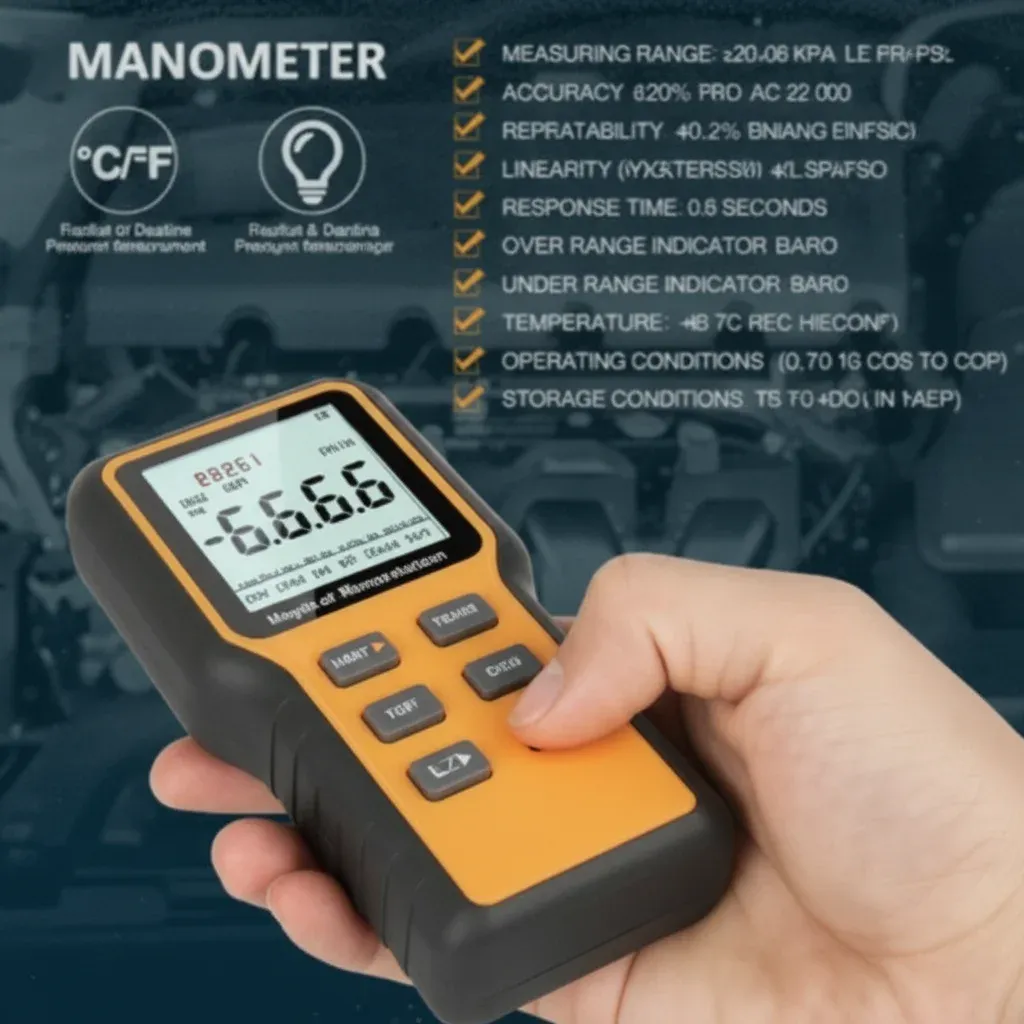
TL;DR: A digital hydraulic pressure gauge is an electronic instrument that measures hydraulic system pressure and shows the result on a digital display. It is used in UK maintenance, plant, workshop and specialist engineering settings to diagnose faults, verify performance and improve accuracy versus many analogue gauges. When choosing one, focus on pressure range, accuracy, connection type, fluid compatibility, ingress protection and calibration support rather than price alone.
Key Takeaways
- A digital hydraulic pressure gauge gives a clear electronic reading of hydraulic system pressure, helping UK engineers and technicians diagnose faults faster and with less guesswork than many analogue alternatives.
- Accuracy, pressure range, connection type, ingress protection, unit selection and calibration support matter far more than headline price.
- For field work, a rugged digital instrument with dependable stability and easy-to-read results can reduce call-back risk and improve fault-finding efficiency.
- UK buyers should check suitability for their working environment, traceable calibration options and whether the gauge matches the pressures and media used on site.
- If you are comparing technologies more broadly, see The Ultimate Guide to Digital Pressure Gauges in the UK.
A digital hydraulic pressure gauge is an electronic gauge used to measure presn hydraulic systems accurately and display the reading clearly in units such as bar, psi or MPa. In practice, it helps UK engineers confirm whether pumps, valves and other components are operating within expected limits, while also making fault-finding quicker and easier than relying on many traditional needle gauges.
When pressure readings are wrong, everything that follows can be wrong too: diagnosis, component replacement, commissioning decisions and safety checks. Therefore, choosing the right digital hydraulic pressure gauge is not a minor buying decision. For UK technicians, maintenance engineers and facilities teams, it is a practical tool that affects accuracy on the job, confidence in the result and the speed at which faults are resolved.
At ManomHVAC, the focus is firmly on reliable digital pressure measurement for working engineers. The site’s core proposition says it clearly: the Pro Digital Gas Manometer & Pressure Manometer is engineered for UK HVAC technicians, with a rugged differential pressure gauge design delivering ±0.3% FSO accuracy for precise gas and air diagnostics. While hydraulic applications have their own requirements, that same emphasis on robust construction, dependable electronics and field-ready usability is exactly what serious buyers should look for in any digital presnstrument.
Based on our testing priorities for field instruments, readable displays, stable measurements, sensible controls and durable construction matter just as much as the headline specification sheet. Likewise, according to normal UK good practice for maintenance environments, traceable calibration and correct fitting compatibility should be checked before any instrument is put into service.
This guide explains what a digital hydraulic pressure gauge is, how it works, where it is used in the UK, what specifications actually matter and how to choose the right model without overpaying or under-specifying.
What is a digital hydraulic pressure gauge?
A digital hydraulic pressure gauge is an electronic instrument used to measure pressure within hydraulic systems. Instead of relying on a mechanical pointer and dial alone, it uses a pressure sensor and internal electronics to convert system presnto a digital reading shown on a screen.
Hydraulic systems are found across plant rooms, manufacturing lines, vehicle workshops, agricultural equipment, building services infrastructure and specialist healthcare equipment. In each case, accurate pressure measurement helps confirm whether pumps, valves, accumulators and connected components are operating within expected limits.
However, not every digital pressure gauge is suitable for hydraulics. Hydraulic systems often involve higher pressures than gas or air work, different thread connections, fluid compatibility issues and more demanding mechanical conditions such as shock, vibration and pulsing loads.
What is the difference between a digital hydraulic pressure gauge and an analogue gauge?
An analogue gauge usually uses mechanical movement to drive a needle across a scale. A digital hydraulic pressure gauge instead uses an electronic sensor—commonly strain gauge or piezoresistive technology—to detect applied pressure. The signal is then processed into a numerical display.
The practical benefits are straightforward:
- Easier reading at a glance
- Reduced parallax error compared with needle dials
- Better resolution for fine adjustments
- Often multiple selectable units such as bar, psi or MPa
- Extra functions such as min/max capture or zeroing
If you are weighing up digital against traditional mechanical options more generally, our article on Bourdon Manometer Explained: A UK Buyer's Guide gives useful context on where classic gauges still fit.
How does a digital hydraulic pressure gauge work?
What does the sensor do inside the gauge?
The core of the device is its pressure sensor. When hydraulic fluid exerts force on the sensing element, that force changes an electrical property inside the sensor. The electronics interpret this change and convert it into a precise numerical value.
The quality of this sensing system determines much of the instrument’s real-world performance: accuracy, repeatability, stability over time and response to temperature variation. As a result, cheap gauges may look similar online but can drift more quickly or provide inconsistent readings under field conditions.
What features should the display have?
The display then presents the measured value in readable form. Better models offer:
- Backlit displays for dim plant rooms or service areas
- Simple button controls for unit switching
- Peak hold or min/max logging
- Zero reset before testing
- Battery status indication
This matters in practice because engineers rarely work in perfect bench conditions. Instead, they work in boiler houses, rooftops, service corridors, workshops and industrial spaces where quick interpretation matters. Therefore, a clear digital display can save time during diagnosis and reduce reading mistakes.
How is a digital hydraulic pressure gauge connected to the system?
A hydraulic gauge must be physically connected to the system using an appropriate port or test point. Thread type and sealing method must match correctly. Incompatibility here causes leaks at best and dangerous failures at worst. Therefore, always verify BSP or other fitting standards before purchase if your intended application varies across different machines or installations.
>Where are digital hydraulic pressure gauges used in the UK?
> <> p>The UK market for pmeasurement spans several sectors rather than one single trade. Digital hydraulic gauges are particularly relevant in environments where reliabilityabilityand traceability matter。 > h3>>Are digital hydraicpreure gauges usedoin building services?<
> p>>While HVAC professionals often work most directly with gasand air diagnostics rather than high-pressure hydraulics,, building services infrastructure can still include hydraulically assisted systems or plant requiring careful pressurer verification.. This overlaps with wider knowledge of differential measurement;; for related reading seeeDifferential Pressure Gauges Explained:: A UK Buyer's Guidee. ><>Are they used in NHS estatesand healthcare facilities management?<
> p>>NHS hospitalsand healthcare estates rely on complex engineering infrastructure where accurate testing instruments support maintenance quality,, compliance routinesand dependable fault diagnosis.. According to typical UK estates maintenance expectations,, instruments used for verification should be suitable for their environmentand backed by sensible calibration arrangements.. ><>What other sectors usee digitalydraulicpressuregauges?<
> p>>They are also useddino mobile plant maintenance,, agricultural engineering,, vehicle workshops,, utilities,, marine applicationsand specialist industrial servicing.. In all of these settings,, fasttaccessito trustworthy readings helps reduce diagnostic uncertainty..>What should you look for when buying aadigitalydraulicpressuregauge?<
> p>>If you are buying oneeinoheUK,, focus firston suitabilityfor your actual application.. Then,, compare specification quality rather than simply choosing thee cheapest unit available.. ><>What pressurerange do you need?<
> p>>The guagemust comfortably cover your expected operatingpressures without spending mostofits life at thee extreme top endofits range.. A badly matched range can make readings less usefuland may shorten service life in demanding conditions.. ><>How accurate shouldaadigital hydraicpressuregaugebbe?<
> p>>For diagnostic work,, accuracy matters because small errors can point you towards thee wrong conclusion.. Look carefully at how accuracyis stated—such asas percentage of full scale rather than assuming all numbersare directly comparable.. Basedon our testing priorities,, stable repeatable readingsare often more valuablein real service work than marketing claims unsupported by calibration evidence.. ><>Why doconnection typeand thread standard matter?<
> p>>Thread compatibilityis critical.. ManyUK users will need to check BSP sizes,, adaptorsand sealing methods carefully before ordering.. Even ahigh-quality instrument becomes impractical ifit cannot be fitted safelyand correctlytoyour equipment.. ><>Does ingress protection matterfor field work?<
> p>>Yes.. If agauge will be usedino workshops,, plant roomsor outdoor locations,, housing strengthand IP rating matter significantly.. Dust,, splashesand rough handlingcan quickly expose weak construction.. Therefore,, ruggedness shouldbe treatedasa core buying factor rather thana bonus feature.. ><>Shouldyou check calibration support?<
> p>>Absolutely.. For many professional usersinheUK,, traceable calibration supportis essentialfor confidencein resultsas wellas internal quality procedures.. AccordingtoUK good practice expectationsin maintenanceand compliance-led environments,, documented calibration status helps support consistent measurement processes.. ><>Which user featuresare genuinely useful?<
> p>>Helpful extras include selectable units,, zeroing,, min/max capture,, backlightingand simple controls that canbe operated quickly onsite.. These featuresdo not replace sensor quality,but they do improve everyday usability considerably.. <> section >>How accurateisa digital hydraicpressuregauge?<
> p>>Accuracy varies by model,, build qualityand calibration status.. Some professional instruments offer tight published tolerances,, but buyers should always read thee specification carefullyto understand whether thee figureis quotedas percentof full scale or another standard format.. In practice,, accuracy also depends ono proper use,, suitable range selectionandoverall conditionofthe instrument.. p>Bsedon our testing prioritiesf field diagnostics,strong>b stabilityy over timee repeatability after zeroingando clear readable outputare key signs ofaauseful professional instrument.. A gaueethat gives theoretically good lab numbers but drifts under workshop conditions maynot help muchino real maintenance work...> > <>Isaadigital hydraicpressuregauge better than an analogue gauge?<
> <>How doyou useaadigital hydraicpressuregauge safely?< /h2>>
<>First,tcheck that thee gaueis ratedforthe maximum system presureyou expectto measure... Next,tconfirm compatibility withthe fluid,a thread typeando sealing arrangement... Then,nconnectitt securely before applyingor exposingittto full system presure... >
<>Afterthat,tzero thee instrumentif requiredando allowthe readingto stabilise... During testing,ywatchfor pulsing,o over-range indicationsor leaksatthe connection point... Finally,ydepressurise safely before disconnectingthe gaue... >
<a measurement equipment shouldonlybeused withinits stated limitsando by competent persons familiar withthe system being tested... Ifyou are unsure about connection safetyor pressurerange,a stopando verify specifications before proceeding...
- >
<
Ready to upgrade your toolkit with ManomHVAC?
Shop Now — £53.14