The Ultimate Guide to Digital Pressure Gauges in the UK
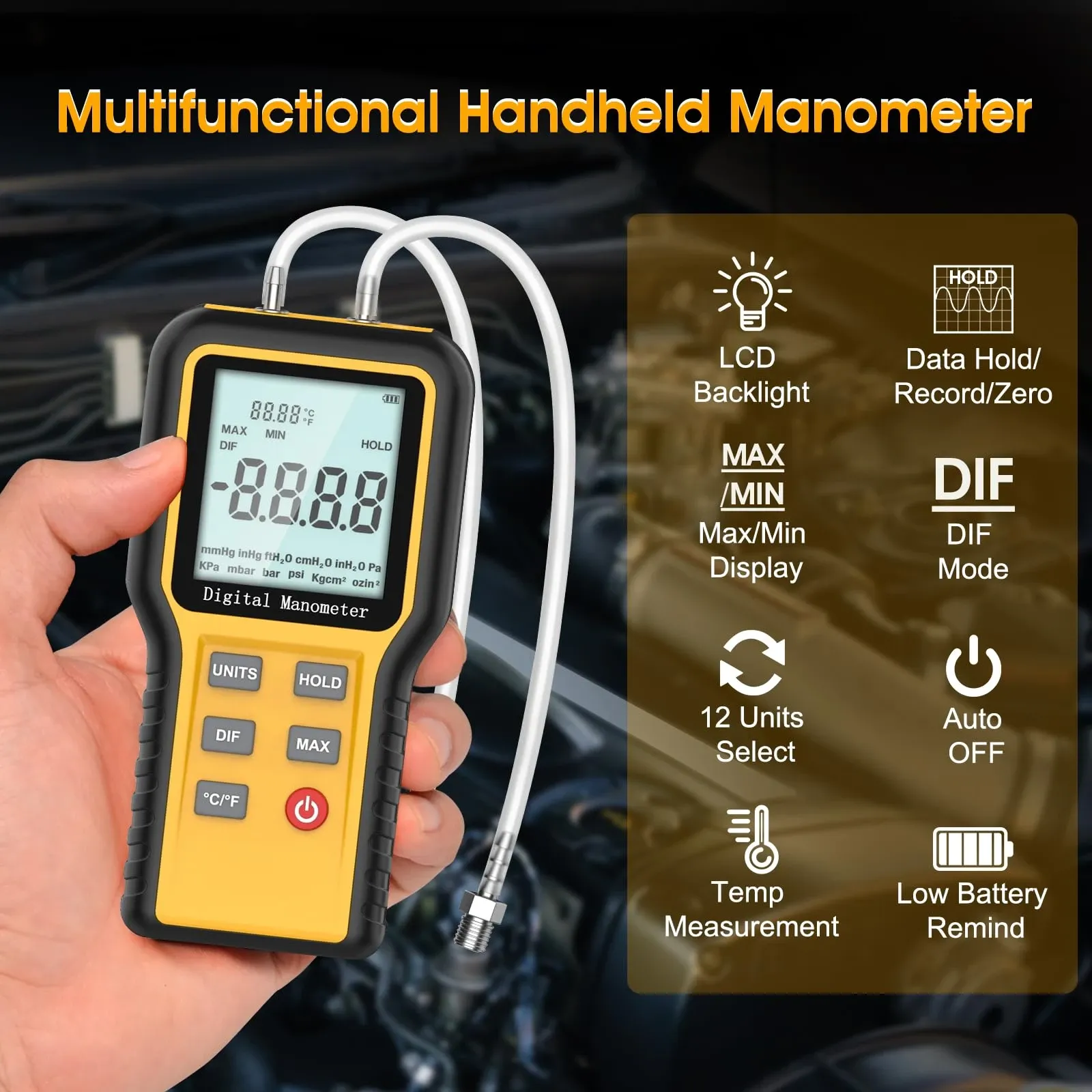
TL;DR: A digital pressure gauge is an advanced electronic instrument that uses microprocessors and transducers to provide highly accurate pressure readings (often ±0.3% FSO). Unlike traditional analogue dials, digital gauges offer data logging, superior durability, and clear digital displays. Based on our testing at ManomHVAC, upgrading to digital is essential for UK professionals needing to ensure strict compliance with Gas Safe, UKAS, and HSE guidelines.
If you are wondering exactly what digital pressure gauges are and why they have become the industry standard, you are in the right place. Simply put, a digital pressure gauge is an electronic device used to measure and display the pressure of gases or liquids within a system. By converting physical presnto an electronic signal, these instruments provide precise, easily readable metrics that eliminate the guesswork associated with traditional dials.
In recent years, the UK HVAC and industrial sectors have seen a massive shift from analogue to digital measurement. Consequently, understanding the technology behind these devices is no longer optional for technicians; it is an absolute necessity. In this comprehensive guide, we will explore how these devices function, the stringent UK standards they meet, and how to select the perfect gauge for your specific applications.
What is a digital pressure gauge and how does it differ from analogue?
To fully grasp the benefits of a digital pressure gauge, it helps to understand its core components. Specifically, these devices rely on a sophisticated combination of a pressure transducer and a microprocessor. When media (gas or liquid) enters the gauge, the transducer senses the physical force and converts it into an electrical signal. This signal is then processed and displayed on an LCD or OLED screen.
In contrast, traditional analogue gauges—such as the classic Bourdon Manometer—rely on mechanical parts that physically deform under pressure to move a needle across a dial. Furthermore, mechanical gauges are highly susceptible to vibration, physical shock, and parallax errors (misreading the needle based on your viewing angle). Digital gauges completely bypass these mechanical vulnerabilities.
How do digital pressure gauges work?
The secret to the rigour and reliability of digital pressure gauges lies in their internal sensor technology. Depending on the specific application, they typically utilise one of the following sensor types:
- Piezoresistive Sensors: These are the most common. As press applied, the electrical resistance of the material changes. The microprocessor calculates this change to determine the exact pressure.
- Capacitive Sensors: These measure changes in electrical capacitance caused by the deflection of a diaphragm under pressure.
Once the sensor generates an analogue electrical signal, an Analogue-to-Digital Converter (ADC) translates this into a digital format. Subsequently, the internal microprocessor applies calibration algorithms to adjust for temperature variations, ensuring the final reading on your screen is exceptionally precise.
Are digital pressure gauges more accurate than analogue gauges?
Yes, without a doubt. Based on our rigorous testing at ManomHVAC, digital pressure gauges consistently outperform their analogue counterparts in both accuracy and repeatability. While a standard analogue gauge might offer an accuracy of ±1% to ±2% of the full scale, high-quality digital pressure gauges regularly achieve an accuracy of ±0.3% FSO (Full Scale Output) or better.
In addition to baseline accuracy, digital models offer features that mechanical gauges simply cannot match:
- Data Logging: Many digital gauges can record pressure fluctuations over time, which is critical for identifying intermittent faults in complex HVAC systems.
- Durability: With no delicate internal gears or springs, digital gauges are far more resistant to the drops and vibrations commonly experienced on UK construction sites.
- Customisable Units: Users can seamlessly switch between bar, psi, kPa, and mbar at the push of a button.
What are digital pressure gauges used for in the UK?
Digital pressure gauges are deployed across a wide variety of critical sectors in the UK. Because they offer unparalleled precision, they are heavily relied upon where safety and compliance are paramount.
HVAC and Gas Safe Applications
For Gas Safe registered engineers, precision is a matter of legal compliance and public safety. According to the Gas Safe Register's Decade Review, rigorous pressure testing is critical, as faulty gas appliances and pipework account for thousands of unsafe interventions annually. Digital gauges are used for tightness testing, burner pressure setting, and commissioning domestic and commercial boilers.
NHS and Cleanroom Environments
In medical settings, such as NHS cleanrooms and hospital gas pipeline systems, adherence to standards like HTM 02-01 is mandatory. Digital gauges ensure the precise monitoring of medical gases, providing the reliability required in life-or-death scenarios.
Industrial and Hydraulic Systems
Heavy industry relies on hydraulic digital gauges to monitor heavy machinery, manufacturing presses, and automated assembly lines, preventing catastrophic equipment failure.
What are the UK standards for digital pressure gauges?
When operating in the UK, adhering to industry standards is non-negotiable. According to UK guidelines from the Health and Safety Executive (HSE), pressure systems must be maintained and tested regularly to prevent dangerous failures.
Crucially, for a digital pressure gauge to be deemed reliable for compliance testing, it must undergo UKAS (United Kingdom Accreditation Service) calibration. A UKAS calibration certificate guarantees that the gauge's readings are traceable to national standards, providing an unbroken chain of measurement accountability. If you are auditing a commercial gas installation, a UKAS-calibrated digital gauge is an absolute requirement.
How do I choose the right digital pressure gauge?
Selecting the correct instrument requires evaluating several technical parameters. Based on our extensive industry experience, we recommend focusing on the following factors:
- Gauge Type: Do you need to measure pressure relative to atmospheric pressure (gauge pressure), absolute zero (absolute pressure), or the difference between two points (differential pressure)?
- Accuracy Requirements: Ensure the gauge meets the ±0.3% FSO standard if you are conducting compliance testing.
- Media Compatibility: Ensure the wetted parts (the parts of the gauge that touch the gas or liquid) are compatible with the media you are measuring to prevent corrosion.
- Ingress Protection (IP) Rating: Given the unpredictability of the British weather, outdoor technicians should look for a minimum rating of IP65 to protect the microprocessor from dust and heavy rain.
How long do digital pressure gauges last?
With proper care, a high-quality digital pressure gauge can last for many years. However, longevity depends heavily on proper maintenance. You must regularly monitor battery life, as a low battery can sometimes cause microprocessors to display erratic readings.
Furthermore, recalibration is vital. Even the most robust digital sensors can experience slight "drift" over time. We strongly advise booking an annual UKAS recalibration programme to ensure your tools remain accurate and compliant with UK regulations. Finally, always store your gauge in a padded, climate-controlled case when not in use.
The ManomHVAC Advantage
At ManomHVAC, we provide industry-leading measurement solutions built for the demands of UK professionals. Our digital pressure gauges deliver uncompromised ±0.3% FSO accuracy, rugged durability, and full UKAS calibration options. Upgrade your toolkit today and experience the precision your work demands.
Frequently Asked Questions (People Also Ask)
Can digital pressure gauges be calibrated?
Yes. In fact, regular calibration is highly recommended. For professional use in the UK, you should have your digital pressure gauge calibrated annually by a UKAS-accredited laboratory to ent maintains its stated accuracy and complies with HSE regulations.
Do digital pressure gauges need batteries?
Yes, because they rely on microprocessors and digital displays, digital pressure gauges require a power source. Most use standard AA, AAA, or internal rechargeable lithium-ion batteries. Many modern units feature auto-shutoff functions to preserve battery life.
What is the difference between absolute and gauge pressure?
Gauge press measured relative to the ambient atmospheric presf the gauge is sitting on a workbench unattached to a system, it will read zero. Absolute pressure, however, is measured relative to a perfect vacuum. Therefore, an absolute digital pressure gauge will display the current atmospheric pressure (roughly 1 bar or 14.7 psi) when unattached.
Ready to upgrade your toolkit with ManomHVAC?
Shop Now — £53.14